


FreshBooks Invoicing App
FreshBooks Cloud Accounting
I installed FreshBooks Invoicing App expecting a focused way to create invoices and keep business expenses from becoming a pile of receipts. That is exactly where it makes the most sense: as a mobile companion for freelancers, consultants, contractors, and small service businesses that need to handle money-related tasks while away from a desk. It is a free Business app from FreshBooks Cloud Accounting, with optional in-app purchases ranging from $21 to $65 per item.
My overall impression is practical rather than flashy. The app is designed around a familiar small-business routine: prepare an invoice, track spending, and keep financial administration moving instead of postponing it until the end of the week. That focus is useful, especially for someone who works from a phone and does not want a full accounting suite open every time a client asks for a bill.
How FreshBooks Invoicing App feels in everyday use
The strongest part of the experience is the way invoicing and expense tracking belong together. In real life, those jobs are connected. I might finish a project, need to bill the client, and then remember that I paid for travel, materials, or a subscription connected with that work. Keeping both tasks close together makes the administrative side easier to revisit before details disappear.
A realistic example would be a freelance designer who finishes a client assignment from a café. Instead of waiting until getting home, the designer can use the phone to prepare the invoice while the project details are still fresh, then record the related business expense. That small habit matters. Financial tools are most useful when they reduce the gap between an event and its record.
I also like the fact that the app does not present itself as a general-purpose office replacement. Its store summary points directly to invoice creation and expense tracking, and the experience follows that direction. If your main concern is sending professional bills and maintaining a clearer view of business spending, the app feels more approachable than a large accounting platform built for every possible financial scenario.
Related News

Why WhatsApp Messenger Still Makes Everyday Communication Feel Easy

Jurassic World: The Game Is the Better Dino Tycoon for Strategic Players

Threads in Real Life: Who Should Join, Lurk, or Leave

How SHEIN Turned Shopping Into an Endless Content Feed

How to Make Fortnite Feel Smarter on Mobile

Should You Switch to Microsoft Outlook on Mobile?
There is a trade-off, though. A focused mobile accounting tool can simplify routine work, but it may feel limited to users who want deep control over bookkeeping, complex reporting, or highly customized financial workflows. I would not choose it simply because it is free to install. I would choose it when the everyday problem is keeping client billing and expenses organized without carrying a laptop everywhere.
The current state of the mobile experience
The app currently appears as version 1.24.40 and works on devices running Android 8.0 or later. That makes it suitable for many older phones as well as newer devices, although anyone using an older handset should still expect the experience to depend on the phone’s performance and screen size.
Its age rating is Everyone, which fits the professional nature of the product. There is no entertainment layer to learn and no complicated visual system competing for attention. The interface is intended for ordinary business administration, so the value comes from completing tasks quickly and returning to client work.
Gallery
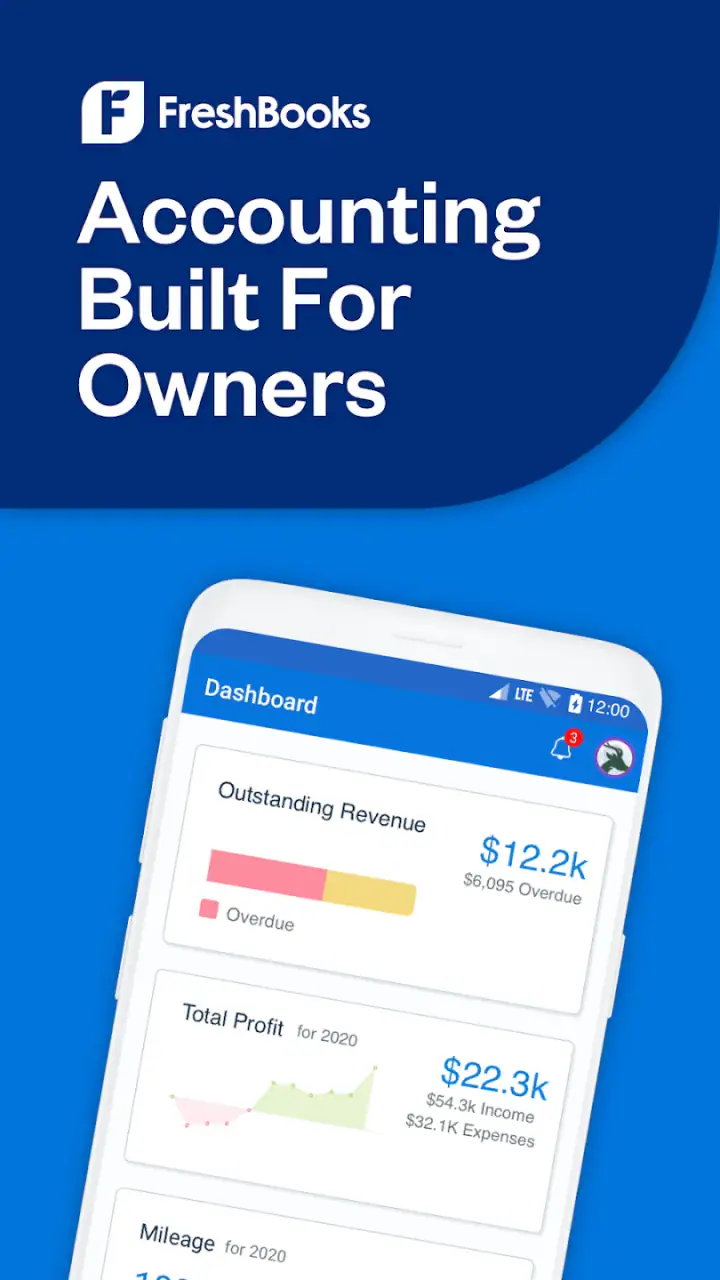
The app has an average rating of 4.3 from around six thousand ratings, with roughly 1.4 thousand written reviews. It has also passed the half-million-install mark. Those figures suggest that it has found a substantial audience among people looking for a mobile FreshBooks experience, while the written feedback is still worth reading carefully because different businesses expect very different levels of accounting depth.
For me, the most important question is not whether it can replace every desktop accounting function. It is whether it helps me maintain momentum. A mobile invoice tool earns its place when it prevents small delays: forgetting an expense, losing a receipt, or leaving an invoice unfinished because the task feels too involved.
What the version and release history tell me
FreshBooks Invoicing App was released on August 29, 2016, so this is not a brand-new experiment. Its current version shows that the mobile product has continued to receive updates rather than remaining frozen in its original form. That history matters for an app handling business records: ongoing maintenance is more reassuring than a tool that appears abandoned after launch.
At the same time, a version number alone does not tell me that every workflow has been redesigned or that the app has become a complete accounting system. I see the current release as evidence of continued product evolution, not a reason to assume that every limitation has disappeared. That distinction is important when deciding whether the app fits a growing business.
Existing users are likely to benefit most from gradual improvements to reliability, compatibility, and the general flow of mobile work. Someone returning after a long break should still approach it as a current mobile invoicing tool, not as a completely different product. I would review the screens and settings after updating before relying on it during a busy billing day, especially if invoicing is central to cash flow.
The developer name, FreshBooks Cloud Accounting, also gives the app a clear identity within the broader FreshBooks ecosystem. That is useful for people who already recognize the service, but it can create expectations. A user may assume that every desktop feature is available in the same form on a phone. I would treat the mobile app as a convenient working surface, not automatically as a one-for-one substitute for every larger-screen accounting task.
A workflow that prevents messy records
My best tip is to record expenses at the moment they happen, rather than treating expense tracking as a monthly cleanup project. The app’s mobile format is particularly suited to that habit. If I wait until the end of a project, I have to reconstruct dates, purposes, and amounts from memory. That is slower and more error-prone than making a short entry while the context is obvious.
A second useful habit is to separate the act of preparing an invoice from the act of checking it. I would draft the invoice soon after completing the work, then review the client name, service description, and amount before sending or finalizing it. This two-step routine reduces the chance of rushing through a bill simply because I am eager to finish the administrative task.
A third insight is to use the app as a daily capture tool even if deeper review happens elsewhere. Some people work best by entering information on a phone and doing a more deliberate financial check on a computer. That division of labor can be sensible. The phone is close when a purchase or completed job occurs; the larger screen is better when I want to inspect a longer period or think through the business as a whole.
I would also avoid creating vague expense notes. “Supplies” may seem adequate in the moment, but a more specific description makes later review easier. The app can help me collect the information, but it cannot decide why a purchase matters to my business. Good records still depend on consistent habits.
Who benefits most from it
This is a strong fit for a solo professional who sends recurring or occasional invoices and wants a straightforward way to keep expenses visible. A photographer, tutor, copywriter, cleaner, independent developer, or consultant may appreciate being able to deal with billing from the same device used for client communication and scheduling.
It is also useful for people who travel between jobs. A contractor who buys materials during the day can record the cost before the receipt gets lost in a vehicle or coat pocket. A consultant leaving a client meeting can prepare the next billing step while the work completed is still clear. These are small moments, but they are exactly where mobile accounting earns its value.
Small teams may find it helpful as part of a broader process, particularly when one person handles client billing and another reviews the business records later. I would establish a simple internal rule about when expenses are entered and how descriptions are written. Without that agreement, even a capable app can become a collection of inconsistent entries.
The app is less convincing for a company with complicated inventory, many approval stages, detailed departmental accounting, or a requirement for specialized financial controls. In those cases, a full accounting platform or desktop-first system may be the better primary tool. The mobile app could still have a supporting role, but I would not make it the center of a workflow that is already complex.
Where it differs from ordinary alternatives
The usual alternative is a spreadsheet. A spreadsheet offers flexibility and can be adapted to almost anything, but it also requires me to design the structure, remember formulas, and maintain consistency. FreshBooks Invoicing App is more purpose-built. Instead of inventing an invoice layout or building an expense sheet from scratch, I can work within a system designed around those business tasks.
Another alternative is a general notes app. Notes are quick for capturing a receipt amount or a reminder to bill someone, but they are not a dependable long-term invoicing workflow. A note can tell me that a client owes money; it does not provide the same sense of a dedicated billing record. The advantage here is organization around the task rather than simply storing text.
Large accounting applications offer more breadth. They may be preferable when I need extensive reports, advanced bookkeeping, or a broader view of business operations. The compromise is that they can feel heavier for a person who only wants to invoice a few clients and track ordinary expenses. FreshBooks takes the more approachable route, but that approach is valuable only if its focused workflow matches the user’s needs.
The free installation lowers the barrier to trying it, but the optional purchases change the long-term decision. The listed in-app purchase range is $21 to $65 per item, so I would examine which paid functions matter to my workflow before building the entire business process around the app. A free download is not the same as a completely free accounting service, and understanding that distinction prevents unpleasant surprises.
Limitations I noticed before making it a main tool
The first limitation is the natural boundary between mobile convenience and financial depth. A phone is excellent for capturing information and handling a quick invoice, but less comfortable for reviewing a large set of transactions or thinking through complicated business figures. If I regularly need detailed analysis, I would want access to a larger-screen workflow as well.
The second is the risk of mistaking organization for accounting judgment. The app can make records easier to collect, but I still need to decide how to describe expenses, which work has been completed, and when a client should be billed. It supports discipline; it does not replace it.
The third is cost planning. Since optional purchases are available, I would not judge the app only by its free entry point. A freelancer with simple needs may find the arrangement reasonable, while a growing business should compare the expected ongoing cost with the value of the features it will actually use. That comparison is more useful than assuming the cheapest-looking option is automatically the best one.
I would also be cautious about relying on a single mobile device for all business administration. Phones can be misplaced, replaced, or inconvenient during a long review session. My preferred approach is to use the app for timely entry and quick actions, while keeping a regular habit of reviewing records through the wider FreshBooks workflow when the business requires it.
What I would watch as the product develops
For future updates, I would pay attention to how the app balances simplicity with the needs of users whose businesses are growing. The early appeal is clear: fast access to invoices and expenses. The challenge is adding useful depth without turning a focused mobile tool into a crowded accounting dashboard.
I would also watch how smoothly existing users can move between mobile work and other FreshBooks tasks. A good companion app should make information captured during a busy day easier to use later, not create a second system that has to be reconciled manually. That continuity is more important to me than adding decorative features.
Another area worth watching is the handling of everyday exceptions. Most invoicing is straightforward until a client changes the scope, a project is partially completed, or an expense needs clarification. The best evolution would help users manage those moments without losing the simple flow that makes mobile entry attractive.
For someone deciding whether to try it now, I would begin with one real workflow rather than moving every financial record immediately. Create a few typical invoices, record the expenses connected to the same work, and see whether the process feels natural after a busy day. That test reveals more than browsing feature names because it shows whether the app fits the way you actually operate.
My recommendation is straightforward: choose FreshBooks Invoicing App when you want mobile-first control over client invoices and business expenses, and do not choose it expecting a complete replacement for every advanced accounting task. It is approachable, established, and aimed at a real problem faced by independent workers. Its free starting point makes experimentation easy, while the optional purchases mean I would still evaluate the full cost carefully.
After using it, I see the greatest value in consistency. If I enter expenses promptly, prepare invoices while project details are fresh, and review the records regularly, the app can remove a surprising amount of friction from small-business administration. If I need intricate bookkeeping from a phone alone, I would look for a broader solution. For freelancers and small service businesses that mainly need dependable invoicing and expense capture, FreshBooks Invoicing App is a sensible tool to put through a real-world trial.
FAQs for FreshBooks Invoicing App
What platforms is FreshBooks compatible with?
FreshBooks is compatible with both Android and iOS devices, allowing users to manage their business finances on the go. Additionally, it offers a web version accessible through any modern browser, providing flexibility to manage your accounts from any device with internet access.
Can FreshBooks handle multiple currencies for invoicing?
Yes, FreshBooks supports invoicing in multiple currencies. This feature is particularly useful for businesses dealing with international clients, as it allows invoices to be sent and received in the client’s preferred currency, helping to streamline transactions and reduce currency conversion issues.
Is it possible to integrate FreshBooks with other business tools?
FreshBooks offers seamless integration with various business tools such as PayPal, Stripe, and QuickBooks, among others. This enables users to sync their financial data across platforms, enhancing productivity and ensuring a smooth workflow by minimizing manual data entry.
How does FreshBooks handle data security?
FreshBooks prioritizes data security by employing industry-standard encryption and secure data centers. Regular security audits and constant monitoring help ensure that your financial information remains protected. This commitment to security provides peace of mind for businesses handling sensitive financial data.
What support options are available for FreshBooks users?
FreshBooks offers a range of support options, including a comprehensive help center, email support, and phone support during business hours. Additionally, they provide webinars and tutorials to help users make the most of the app’s features, ensuring users can get assistance whenever needed.
Pros
- User-friendly interface for easy navigation.
- Integrated time tracking feature.
- Automated payment reminders.
- Customizable invoice templates.
- Supports multiple currencies.
Cons
- Limited reporting features.
- Mobile app lacks some desktop functionalities.
- Higher cost for additional users.
- Occasional sync issues with bank accounts.
- Limited integrations with third-party apps.


